










9 Sustainable Alternatives to Single-Use Plastic Packaging
- Europe banned many single-use plastic products starting in 2021.
- Canada followed suit in the middle of 2023 (although there is pending litigation regarding the ban).
- The UK followed in October.
- In the U.S., hundreds of municipalities have imposed some sort of ban, fee or tax associated with single-use plastics, and there are statewide bans in many states.
It’s easy to see that people and brands across the globe are concerned about the environmental impacts of single-use plastics. According to the United Nations, only 9% of plastic packaging material is ever collected for recycling, and every year an estimated 20 million metric tons of plastic packaging enter our oceans and environment.
This is why reducing or eliminating a significant amount of single-use plastic is on the sustainability target lists of most brands. For them, cancelling plastic is the easy part. Finding a suitable and cost-effective alternative is where it gets hard.
Let us make it a little easier. Since Smurfit Westrock produces packaging from a renewable resource with sustainability as a part of our purpose, we’ve compiled some of the most popular plastic alternatives for you all in one place. First, we’ll give you an overview of alternative packaging materials, and then go through our most popular paper-based alternatives.
Alternative Packaging Materials
Bioplastics
Because their properties are so similar to the plastics currently used for packaging, the use of bioplastics is growing rapidly; sales are expected to nearly triple in the next 10 years. However, when it comes to sustainability, bioplastics may be questionable.
While some make the claim that bioplastics are “biodegradable” or “compostable,” typically, they require an industrial composting facility in order to biodegrade quickly and safely. It’s estimated that they could still take a decade or more to break down in the average backyard compost. And until they do break down, they’ll most likely become landfilled waste or pollution.
Bamboo
Sales of bamboo are expected to almost double over the next 10 years. It’s a renewable material capable of producing similar kinds of packaging to that of wood fiber. While it carries many of the same benefits of paper-based packaging, it does have some drawbacks.
Right now, a majority of bamboo is produced in Asia, which means using it for packaging is likely to require the time and cost associated with importing it. It’ll also be subject to any major global supply chain disruptions or issues (i.e. pandemics, canal blockages, or bridge collapses).
The substrate itself also has to be modified to be strong enough to be a plastic alternative. Researchers believe the production technology of Bamboo fiber reinforced polymer composites (BFRPC) is not yet mature enough for the large-scale production needed to compete with plastic.
Metals
Before the advent of plastic, we packaged most of our products in paper/paperboard, metal, or glass, and all are experiencing a resurgence in the wake of the current plastic-replacement trend. The metal packaging industry is expected to hit an over three percent growth rate in the next several years. Because of its ease of recyclability, some brands (i.e. cosmetics, personal care, or beverages) are choosing it as a form of primary packaging.
One concern with using metals extends to rust and corrosion, which can be a major issue when it’s used as primary packaging, depending upon the product make-up or ingredients. Another concern is weight. If it causes products to weigh more than fiber-based packaging, it’ll cost more to ship and transport.
Glass
Glass packaging is set to grow by a rate of over four percent over the next few years. While primary glass packaging allows for the product visibility that many brands desire and it’s highly recyclable, it’s a much heavier material than paper packaging, which contributes to greater shipping and transport costs. It’s also a lot more fragile, requiring extra measures to protect it in transport.
Paper/paperboard
With new developments in barrier coatings, paper-based products can be used in even more applications including frozen, ready-made meals and beauty and wellness products. This is why the paper packaging industry is expected to grow by over 100 billion dollars globally by 2028 (Smithers Pira).
While it’s lightweight and easy to transport, product visibility is sometimes an issue. Brands needing product visibility might opt for paper-based packaging with cut-outs or plastic-reducing options that package a product in a combination of mostly paperboard with some plastic or bioplastic film inserts.
Let’s review some of our most popular paper-based packaging options for replacing plastic.
1. Paper-based beverage collars (replaces plastic beverage rings)
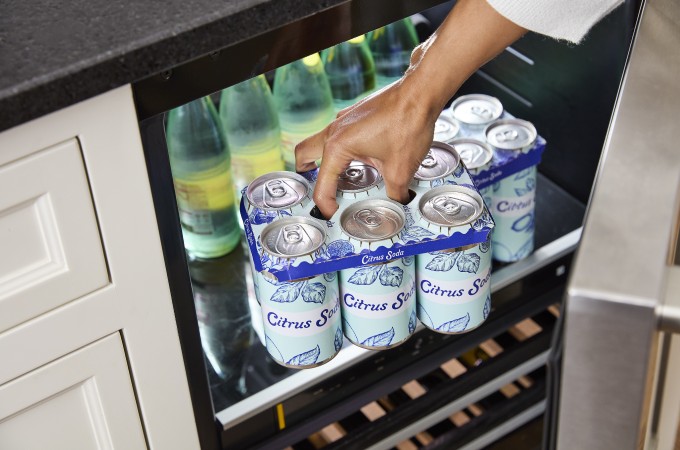
When a Coca-Cola bottler does it, that says something. Major soda and beer brands like them are replacing plastic six-pack rings with options made from paperboard, like CanCollar®, PETCollar® and TopClip®. These options are recyclable where local recycling facilities recover polycoated and wet-strength-treated paperboard. *Brands that made the switch reduced their yearly plastic use by tons. The paperboard solutions are also customizable, so beverage makers can add branding or package beverages in any color they choose, helping their six-packs to be more eye-catching and attention-grabbing from the shelf.
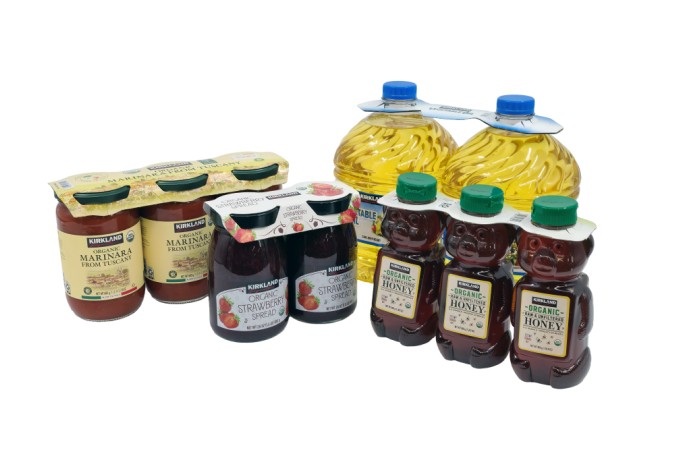
2. Paper-based multipack packaging (replace club store plastic “dogbone” handles, shrink film)
We don’t want to name-drop again, so let’s just say a “major big-box retailer” recently made a serious commitment to plastic replacement by adopting EnduraGrip® and Cluster-Clip® multipack clip solutions to group together products like cocktail mix, cooking oil, and sauces in jars. The switch was a great success, and consumers are often surprised by how secure and durable the paperboard options are. Many pick up products gently, assuming they might break, until they realize they can handle bundled products in the same way as they previously did.
EnduraGrip and Cluster-Clip are both curbside recyclable depending upon their size and dimensions and whether wet-strength paperboard is used. Cluster-Clip won a European Carton Excellence Award (2024) and a PAC Global Gold Award for Sustainability (2023), while EnduraGrip won PAC Global Innovation of the Year in 2023.
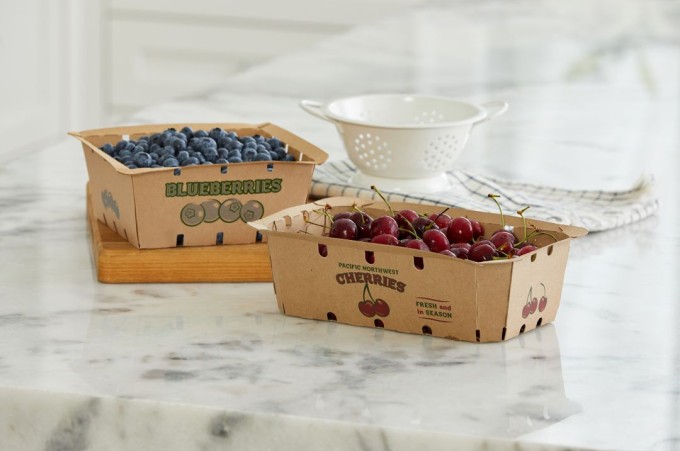
3. Paper-based produce punnets (replaces traditional plastic produce packaging)
Walk into any grocery store and you’ll see plastic packaging lining the shelves. According to a recent Retail Insight survey, a majority of consumers believe grocery stores could do much more to increase their sustainability.
One area where grocers and food producers can cut down plastic use is in the produce department. In the UK, grocers are under pressure to eliminate plastic packaging thanks to consumers, looming legislation and a plastics pact, so they’re now putting the pressure on growers and packers to cut down on plastic produce packaging.
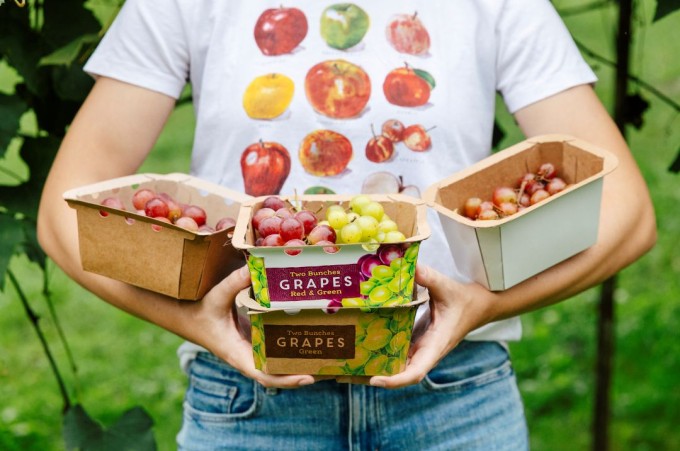
Paperboard options provide a sustainable alternative, offering a line of solutions to replace produce trays, totes, tills, punnets, carriers and clamshells. They come in different levels of moisture-resistance, and after being emptied and flattened, they’re recyclable in most municipalities. The die-cut patterns in the designs allow for venting and product visibility.
We surveyed UK consumers, and based on the results, consumers there would prefer paper packaging to plastic. 86 percent are likely to purchase berries packaged in a paper-based punnet compared to the 78 percent who are likely to purchase them in plastic. These consumers also had a tendency to believe that berries packaged in paper are high-quality. Only 63 percent of consumers thought the berries packaged in plastic were high-quality compared to the 82 percent who believed that about the berries packaged in paperboard. 1
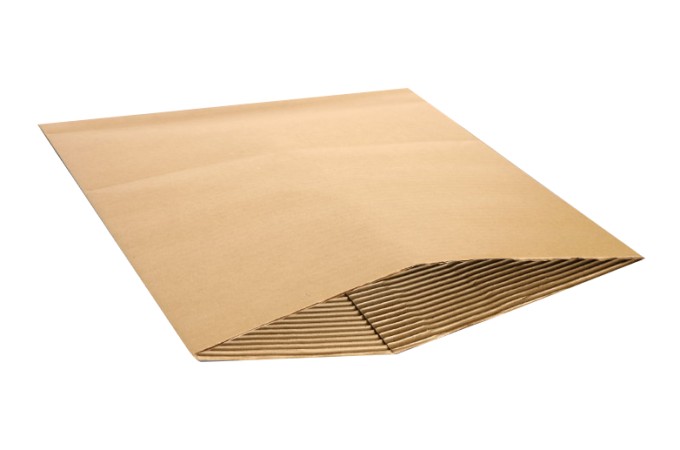
4. Paper mailers (replaces plastic and bubble wrap mailers)
According to the most recent findings, ecommerce used over two billion pounds of plastic packaging in 2019, and that number was expected to over double, reaching four-and-a-half billion pounds by 2025. To cut down on their use of single use plastics, e-commerce retailers are turning to paper-based solutions instead of plastic sacks and bubble mailers.
Retailers are now able to purchase paper mailers with or without internal protective layers, and they can use automated machinery to reduce waste and create right-sized mailers of various dimensions. Smurfit Westrock Pak On Demand produces paper-based mailers and seals and applies labels with one operator. Our KD Fold™ corrugate feeds into the machine to create mailers with an external paper liner and an internal layer that’s fluted to provide cushioning and protection.
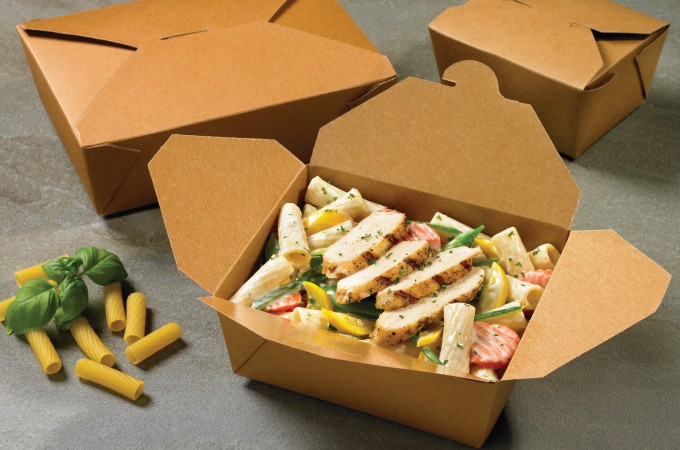
5. Paper-based food takeout containers (replaces traditional plastic prepared meal and foodservice to-go containers)
To replace hard-to-recycle plastic foodservice to-go containers, many brands are turning to paper-based products. Natural kraft paperboard can easily be used to package prepared food … until grease is involved. To prevent oil and grease strike-through and protect food quality, paperboard needs the right coating. There are multiple types of to-go containers to choose from depending on the amount of protection needed. Our clamshell packaging, window packaging, and Fold-Pak® line of containers all provide various levels of moisture and grease resistance.Additionally, containers made from EnShield® substrates have oil-and-grease-resisting properties that make it ideal for packaging baked goods, fried chicken, or fish sticks without unsightly grease stains. Being paperboard, these options are much more easily branded than plastic since you can print logos, design, and even recycling instructions right on the box.
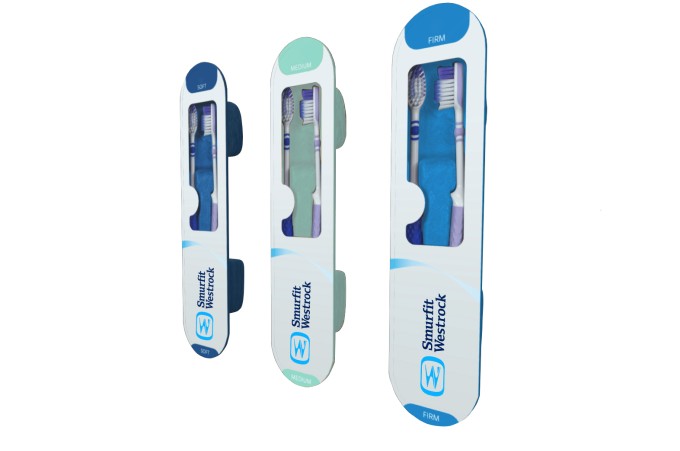
6. Blisterless cartons and molded fiber packaging for health and beauty products (replaces plastic blister packs and shrink wrap)
It’s estimated that globally the beauty industry produces 120 billion units of packaging every year. Toothbrushes, razors, make-up … In many cases, there is rigid plastic that houses the product, and then single-use plastic blister packaging that protects it and readies the product for the shelf. This plastic typically falls into the “hard-to-recycle” category.
NatraPak molded packaging is one alternative that can significantly reduce the plastic from blister packaging by using a molded fiber-based tray, so the packaging is still molded to the product. It can provide product visibility with die-cut open areas, but to protect the product from outside elements, a plastic (or bioplastic) film can still be used to cover the openings. The blisterless carton is another alternative to plastic often used for beauty products However, there are numerous ways to create custom molded packaging free from intentionally added plastic.
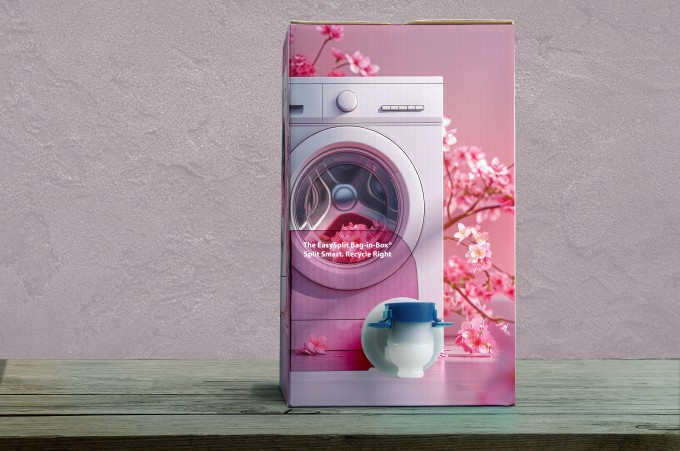
7. Bag-in-Box packaging for beverage, condiments and detergents/cleaners (plastic reduction)
Many of our customers have chosen a BIB to significantly reduce their use of plastic packaging by 50-90%. While Bag-in-Box (BIB) options are not free from intentionally added plastic, instead of using a large single-use plastic container for liquid laundry detergent for example, a brand can switch to a BIB, significantly reducing the yearly amount of plastic it uses by tons.
BIB’s can also be used for other household cleaners, beverages (with or without alcohol) or condiments, such as ketchup or mustard. We’ve even used it to package motor oil. Recently, Brasserie Nationale in Luxembourg used it to reduce its plastic packaging for its water brand, Lodyss, by over 50%.
To provide protection and freshness, the durable box blocks light and prevents damage to the inner bag, while the easy-pour spout makes dispensing the liquid simple. The ability to ship BIB’s flat prior to filling could also reduce shipping costs and related emissions.
8. Paper wrap (replaces shrink film)
Because of its flexibility and durability, shrink film can be hard to replace. But many businesses are trying to do just that. While the material itself is technically recyclable, most recycling facilities don’t have the special equipment needed to process it.
When working with a leading supplier of glass containers in Spain, we developed a paper pallet wrap. Made from our Nertop® Stretch Kraft paper, it’s created to perform in humid conditions. The solution is fully recyclable, reducing plastic waste and waste overall.
Thanks to our partnership with Atlantic Packaging, brands also have a corrugated tray and stretchable paper-based wrap alternative to plastic film that is made with our FibreShield® extensible kraft paper--Canopy. There’s no longer a need to wrap trays of canned beverages or multipack boxes of snacks and cereals in single-use plastic wrap that’s highly unlikely to be recycled. (And yes, you can still pick up the whole package by the wrap.)
Becoming more sustainable is a commitment, but many brands have shown us how possible it is to achieve this goal by switching to products like these. Additionally, using packaging automation in conjunction with paper-based substrates can more significantly improve the sustainability and efficiency of your packaging line. Smurfit Westrock can provide complete solutions including sustainable packaging, expert consultation and packaging automation. If you’re looking to make a packaging switch, our can recommend the sustainable options and consult on how to optimize your packaging line and supply chain based on your current and future needs.
*Based on three customers that made the switch from plastic can rings to CanCollar.
Our Latest Blogs


Frequently Asked Questions